
america’s 250 anniversary walking tour
Driven by curiosity and built on purpose, this is where bold thinking meets thoughtful execution. Let’s create something meaningful together.
History of Fort greene park
Fort Greene Park, previously known as Washington Park, is a 30 acre green space named in honor of president George Washington, first developed in the 1840’s as Brooklyn second public park. Renamed for General Nathaniel Greene in 1867, the landscape connects the American Revolution, prisoner-of-war history, writers and artists, along with the eclectic neighborhood that surrounds it today. Over time, Fort Greene Park has evolved into a place where layers of Brooklyn’s history continue to intersect from its Indigenous roots to the city that stands here today.
Long before the Dutch and British arrived, this land was part of the homeland of the Lenape people, who lived throughout the region we now know as New York and New Jersey. The Lenape cared for and traveled across this landscape for generations, living in relationship with the land and its waterways. Their history is an important part of the story of this place, even though much of it has been overshadowed by the later colonial and Revolutionary-era history of Brooklyn.
The Battle of Brooklyn, which took place in August 1776, became the first major battle fought after the Declaration of Independence, making it the first large-scale test of American independence and involved more troops than any other battle of the American Revolution. During the Revolutionary War, this area consisted of farmland, open hills, and rural roads as British forces advanced through Brooklyn toward American defenses. These elevated hills provided commanding views of the surrounding countryside and New York Harbor. American troops used the area's natural elevation and existing roads as part of their defensive positions.
The battle shaped Brooklyn's landscape and memory allowing Fort Greene Park to reflect countless layers of history, from its earlier Indigenous and agricultural landscape, serving over time as a battlefield, burial ground, memorial landscape, and one of Brooklyn's earliest public parks.
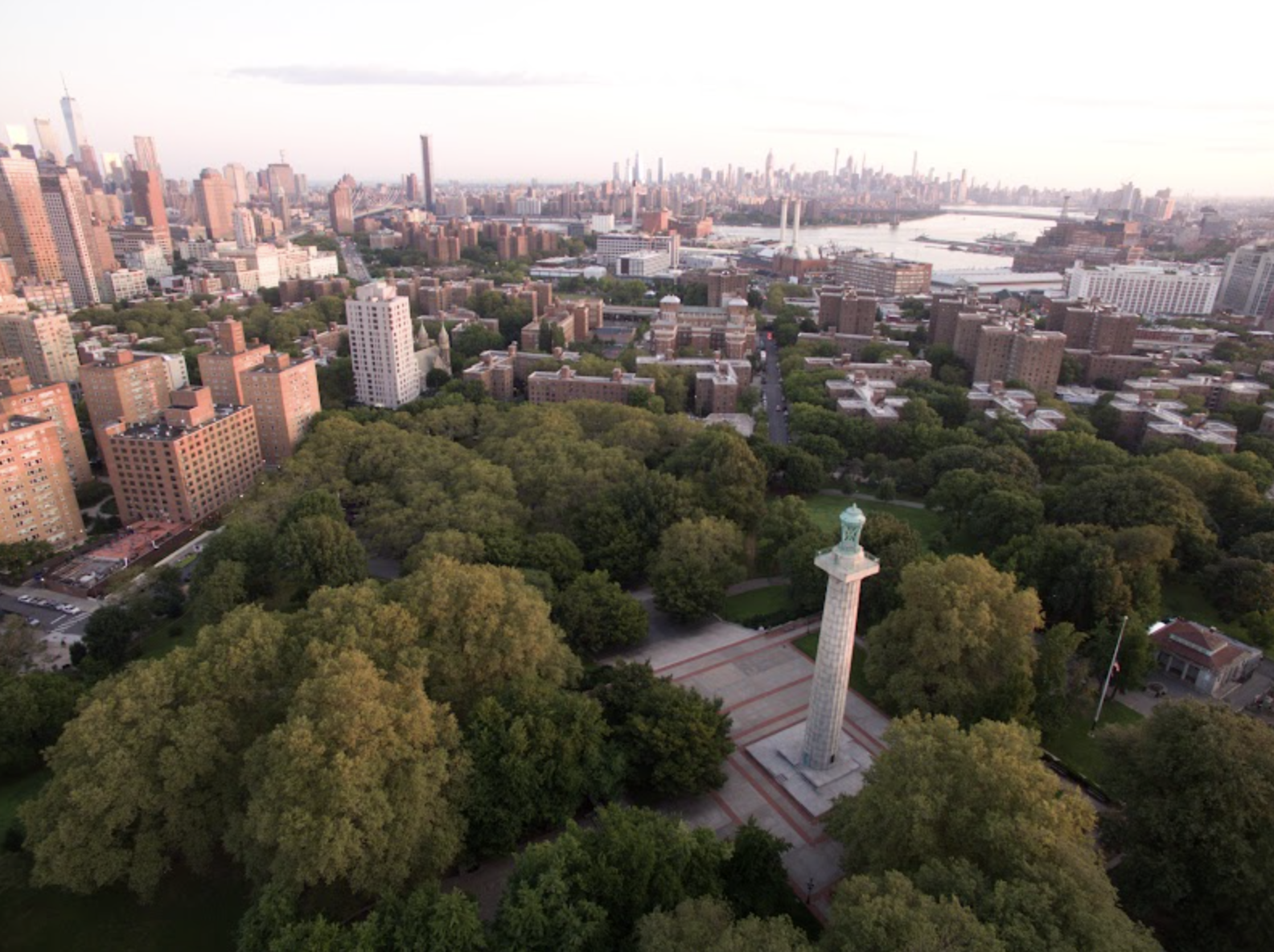
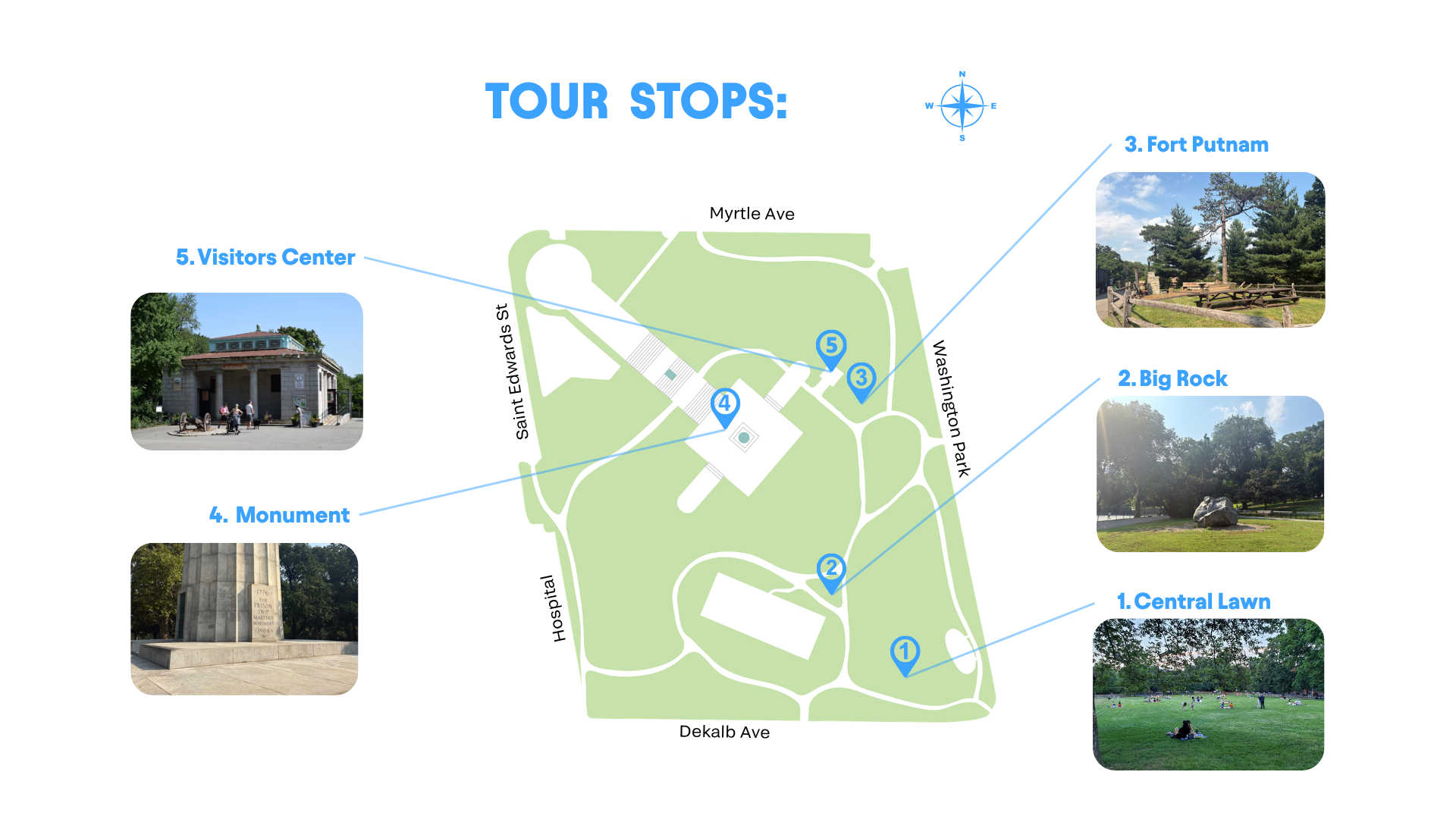
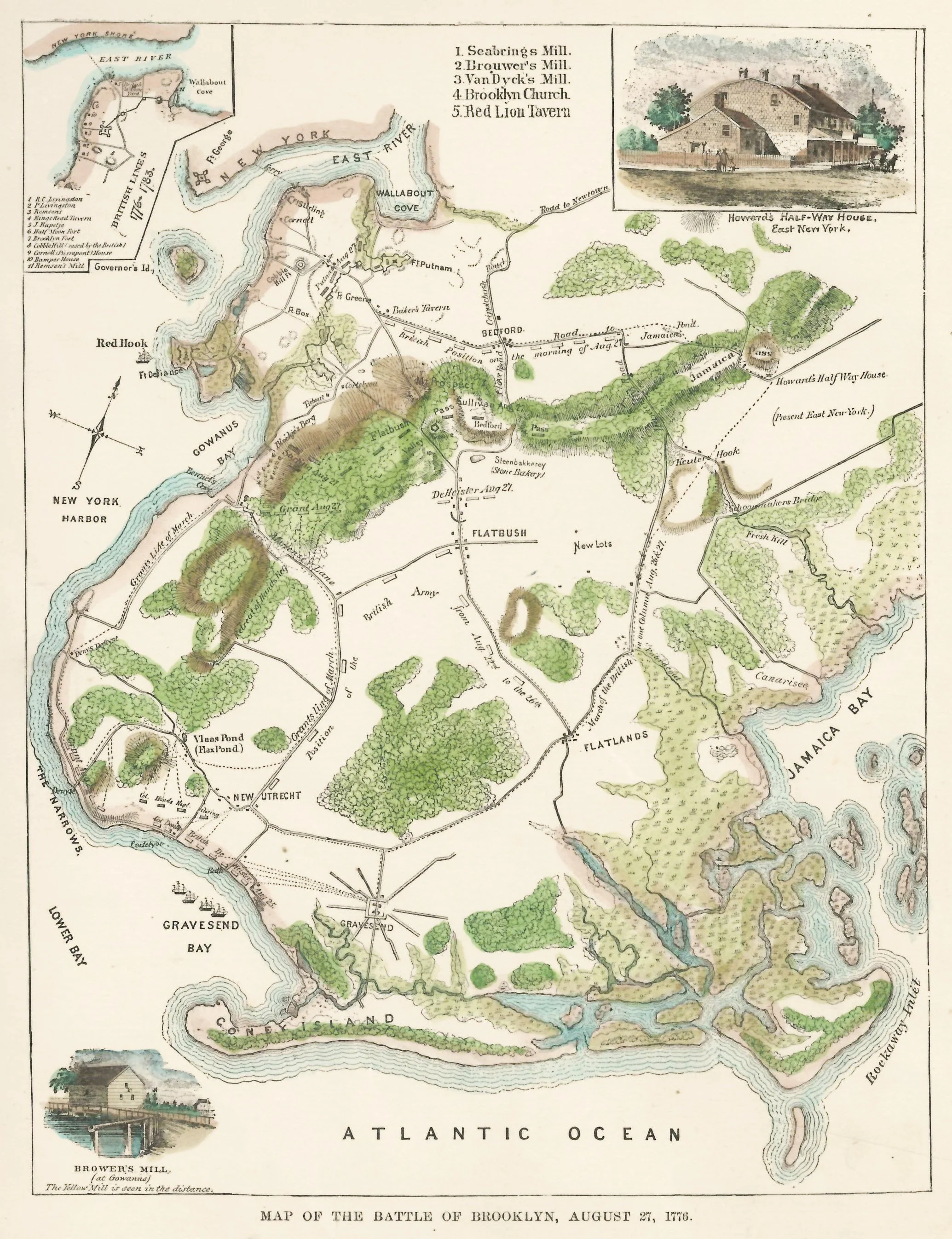
American Defenses on High Ground
From this vantage point we can see downtown Brooklyn and the harbor beyond. In 1776, there were no skyscrapers, bridges, and paved streets. This area was the woodlots at the back of John Cowenhoven’s plantation in 1776. He was a descendant of one of the earliest European settlers in Kings County and enslaved at least five people in 1776: Anthony, Ben, Frederick, Mary and Tom. The farm went from here down to the Wallabout Bay, where Cowenhoven forced the Africans he enslaved to load the produce they grew onto boats to send over to Manhattan to sell.
The hills of Brooklyn offered strategic military advantages because soldiers could observe movement across the harbor and surrounding countryside. The high ground around present-day Fort Greene became important defensive positions during the Battle of Brooklyn. The harbor visible in the distance would later become the site of one of the greatest tragedies of the Revolutionary War.
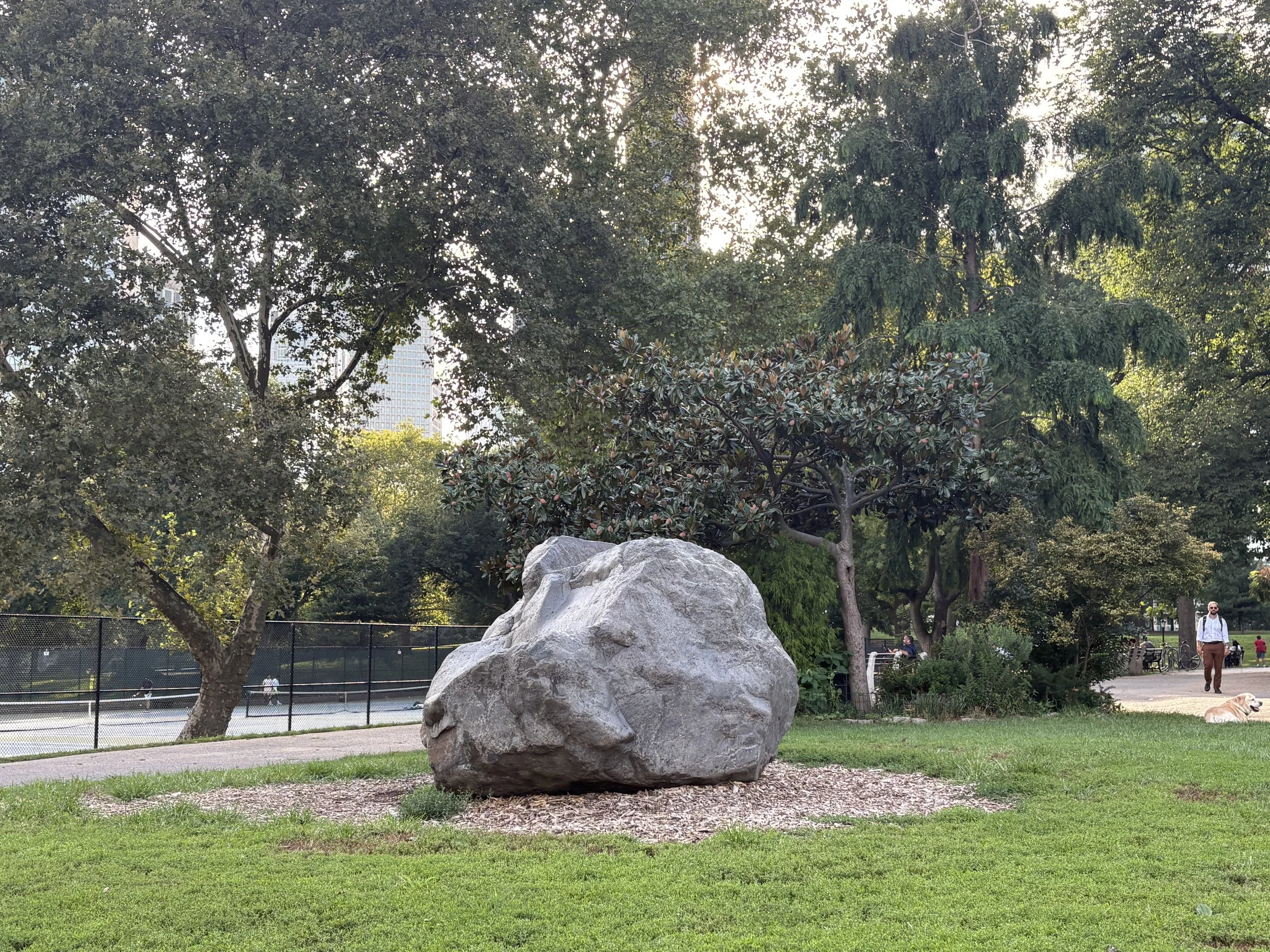
Fun Fact!
This big boulder beside the tennis courts wasn't originally sitting here. It was unearthed during sewer construction in the neighborhood around 2005 and brought into the park. The rock itself is far older, it's a glacial boulder, left behind roughly 18,000 years ago when the last Ice Age glaciers retreated across this region. So even this seemingly ordinary rock connects us to a landscape that existed thousands of years before Brooklyn, before the Dutch and British, and long before the Revolutionary War.
Fort Putnam
In April 1776, General Putnam, an engineer and military officer was sent to New York by General George Washington to strengthen the city’s defenses as British forces prepared to attack. Putnam oversaw the construction of fortifications and defensive earthworks across Brooklyn, including the hill that later became known as Fort Putnam. Nathaniel Greene would later supervise construction on this site. During the War of 1812, the fort was rebuilt and named in his honor.
Six thousand troops from New England, New Jersey, and Pennsylvania came to Kings County in the spring of 1776 to prepare for the British invasion, representing twice the size of the total local population. These American soldiers were some of the most zealous advocates for Independence. They forced every man in Kings County to help build the fortifications—three days a week if you were available, five days if you were enslaved. They bred resentment as they took food and livestock from the locals.
General Nathaniel Greene from Rhode Island, who Fort Green Park and neighborhood is named for, oversaw preparations for the British attack. In May he ordered a statement read stating:
“The General would have the Troops consider We came here to protect the Inhabitants and their Property from the Ravages of the Enemy but if instead of support and Protection, they meet with nothing but Insult and Outrage, we shall be considered as lawless Bandits and treated as Oppressors and Enemies.”
New York was of supreme strategic importance to both the British and Americans. The key to defending New York was controlling Brooklyn—New York not only had the largest and deepest port in all of North America, but control of the Hudson River was the key to controlling the continent in an age before railroads, highways, and cars. If the British could take the Hudson River, starting with Manhattan, they could cut the New England states off from the Middle States.
The Americans determined that cannons placed in Brooklyn Heights could prevent an invasion of Manhattan, so to protect those cannons they built a string of forts from Wallabout Bay (today’s Navy Yard) and Gowanus Creek (now a canal). Fort Putnam was a small star shaped fort made out of logs and earthworks. This was once a wooded area, and Putnam ordered all the trees cut down to build the fortifications. The fort was strategically located on high ground, allowing American soldiers to observe British movements and defend the approaches to Brooklyn Heights.
During the Battle of Brooklyn, American troops used these fortifications to slow the British advances. On August 27, 1776, American forces retreated to fortified positions behind the line of forts between Gowanus Creek and Wallabout Bay, including the fort that we now know as Fort Greene. General Howe, a British Army officer, was afraid that if he lost too many men taking Brooklyn, he might not have enough to take New York, which is what happened at the Battle of Bukher Hill the year before. While Howe waited to figure out an approach, Washington ordered a nighttime evacuation across the East River to Manhattan on the night of August 29–30, 1776 so the soldiers could live to fight another day.
To disguise the retreat, American troops kept campfires burning and maintained the appearance of active battle preparations behind the fort's walls. Sentries kept marching, drums kept beating while regiments were secretly ferried across the river in the dark. A thick fog rolled in that morning, further concealing the retreat and allowing the last troops (including Washington himself) to escape undetected, even after the sun rose. After the British victory, the fort fell into British hands and they demolished it.
-
According to local histories, an enslaved man owned by Catrina Rapalye, a member of one of Brooklyn's old Dutch families discovered what the Americans were doing and tried to alert the British. Similar to the legacy of many enslaved Africans involved in the war, historians did not record their names, just their actions. The man reportedly slipped away and tried to warn British troops that Washington's army was escaping across the river, hoping to help them catch the Americans before the evacuation was complete.
However, the British soldiers he encountered couldn't understand him due to language barriers: he likely spoke in the Dutch-based patois common among Brooklyn's enslaved population at the time. Many enslaved New Yorkers of the era spoke Low Dutch, sometimes mixed with African-derived speech patterns, rather than standard English. By the time the message reached someone who could act on it, the fog had settled and the Americans had already slipped away.
The story is often cited as one of the small, almost accidental turns of fate that allowed Washington's army to survive intact after a crushing defeat had the warning been understood in time, the Continental Army might have been trapped and possibly destroyed on Brooklyn's shores, potentially ending the war in its first year. The story also shows how Africans enslaved in Kings County could shape the outcome of the battle.
-
22-year old Benjamin Tallmadge of Connecticut was stationed right here in August 1776. After completing his studies at Yale in 1773, Tallmadge began to think seriously about joining the army in support of American Independence. He joined the Continental Army as a lieutenant, He first saw action in the Battle of Brooklyn. He later wrote:
“This was the first time in my life that I had witnessed the awful scene of a battle, when man was engaged to destroy his fellow-man. I well remember my sensations on the occasion, for they were solemn beyond description, and very hardly could I bring my mind to be willing to attempt the life of a fellow creature.”
Tallmadge also wrote about the retreat from downtown Brooklyn:
“It was one of the most anxious, busy nights that I ever recollect, and being the third in which hardly any of us had closed our eyes to sleep, we were all greatly fatigued. [...] In the history of warfare I do not recollect a more fortunate retreat. After all, the providential appearance of the fog saved a part of our army from being captured, and certainly myself.” Providential means destined by God.
While Tallmadge got away, unfortunately his older brother William Tallmadge was taken prisoner at the Battle of Brooklyn. According to Tallmadge’s memoir, “literally starved to death in one of [the British] prisons.”
Later in the war, Benjamin Tallmadge organized and ran Washington's primary intelligence network operating in British-occupied New York and Long Island: the Culper Spy Ring, considered one of the most successful espionage operations of the war, the ring's codes and ciphers developed by Tallmadge himself.
British Occupation
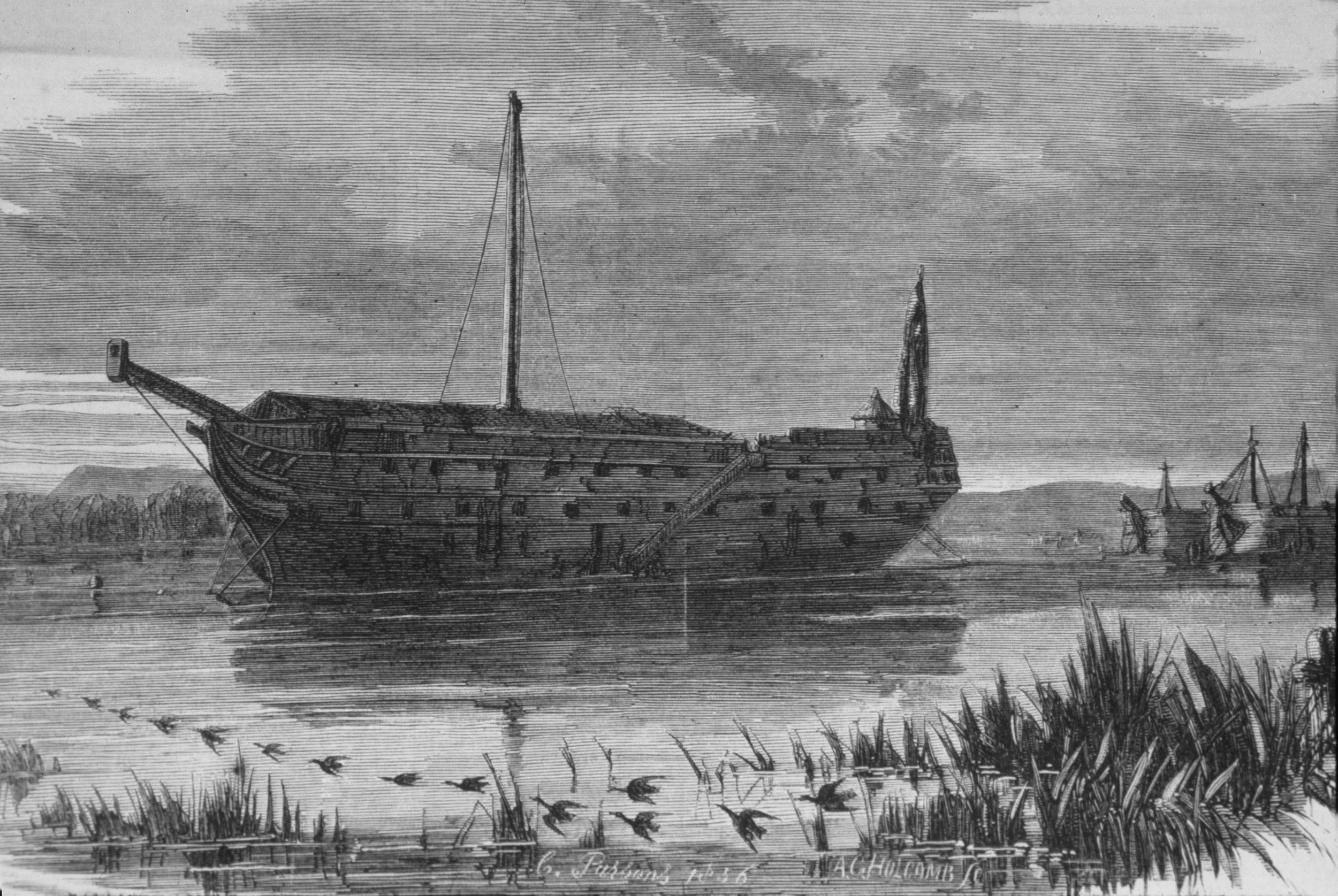
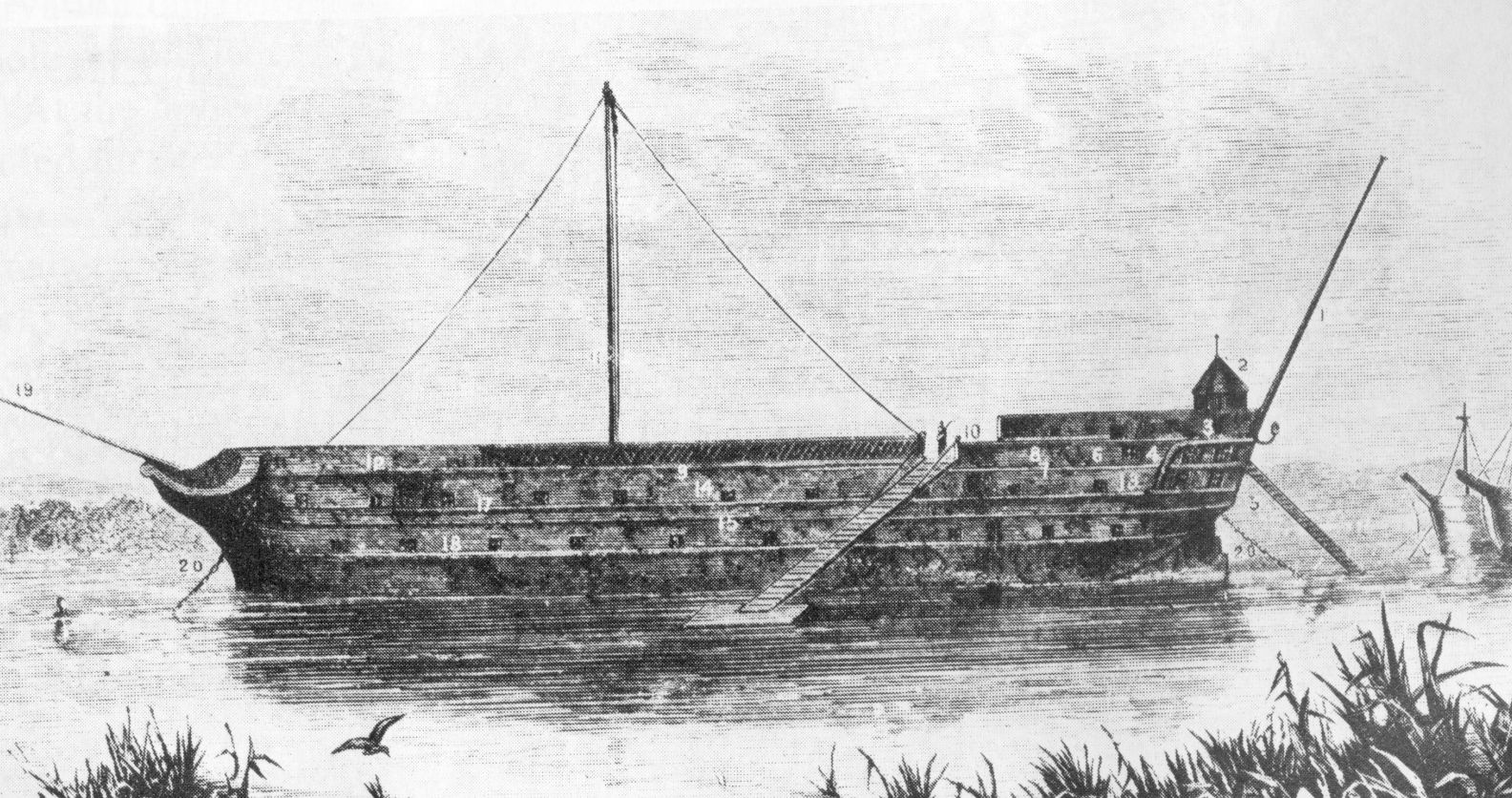
The British occupied New York and Brooklyn from 1776 until 1783, and prison ships were anchored in Wallabout Bay throughout much of that occupation. The first large prison ship, the Whitby, arrived in October 1776, shortly after the Battle of Brooklyn. Other ships followed, including the infamous HMS Jersey, which became a prison ship around 1780. The ships remained in Wallabout Bay for much of the British occupation, until the British evacuated New York in 1783.
After the Americans were defeated in August 1776, the British took control of Brooklyn and New York City and remained in control until the end of the Revolutionary War in 1783. For the people living here, the battle was not simply the end of a military engagement; it marked the beginning of seven years of British occupation. Brooklyn's residents did not all support the same side. The Revolution divided communities between Patriots, Loyalists, and people trying to survive between the two sides.
Many Loyalists remained or returned under British protection, while Patriot families could face property loss or other consequences. The properties belonging to Loyalists were confiscated by the new American government after the war. Enslaved people also had to make difficult decisions. The British offered freedom to enslaved people owned by Patriots who escaped and assisted the British. An estimated 20,000 enslaved people self-emancipated and joined the British during the war, creating a growing Black community in British-controlled New York.
This created an opportunity for enslaved people who were not simply spectators. They were making choices, fighting, escaping slavery, working, and trying to determine what freedom might look like for themselves. And it is these prisoners who died in captivity, that the monument before us would eventually be built to remember.
Prison ship martyrs’ monument
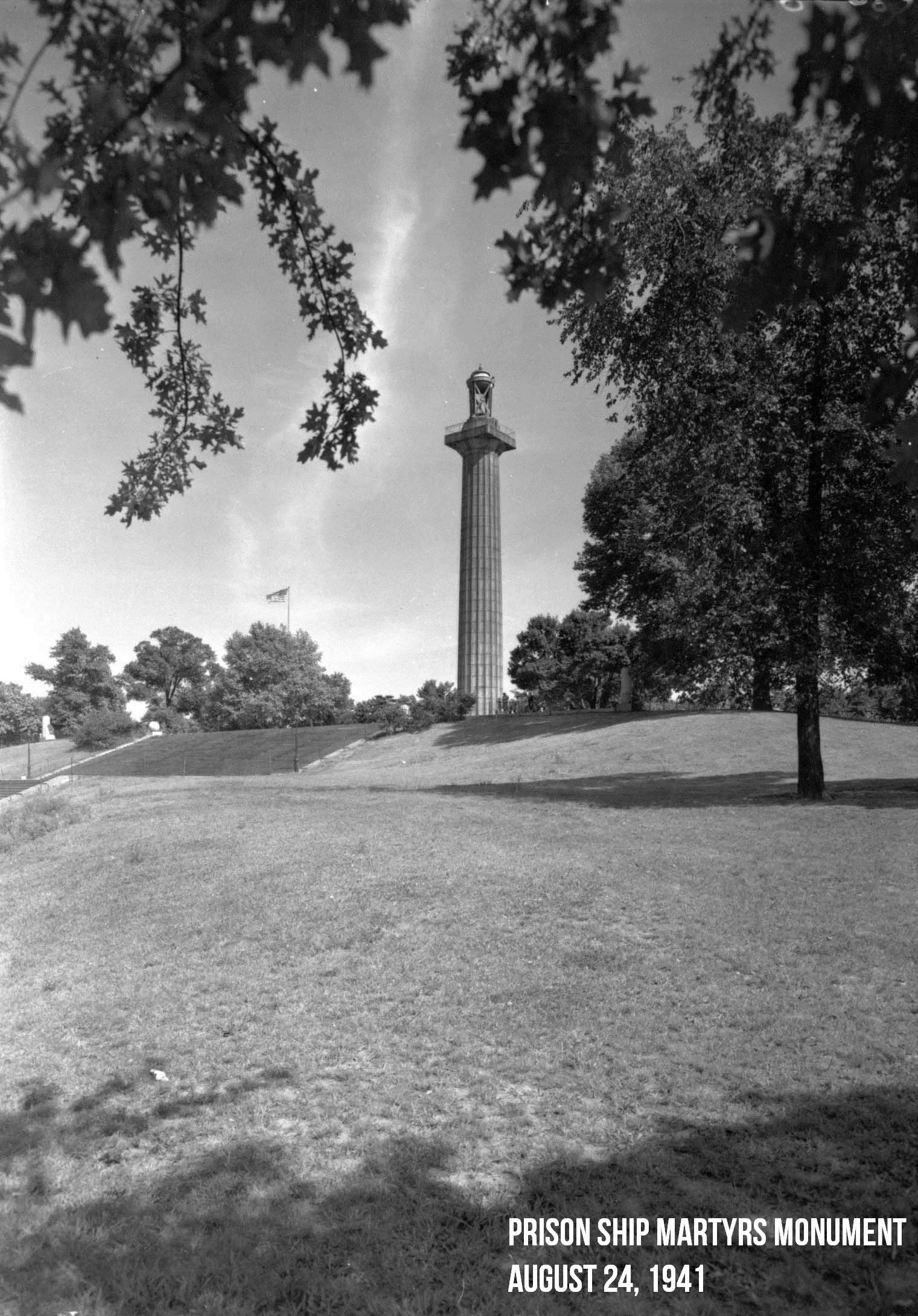
The prison ship martyrs were prisoners of war from the American Revolution, ranging from continental soldiers, sailors, and civilians, who were initially captured during the Battle of Brooklyn, New York, Harlem Heights and Westchester (including suspected spies).
Where they were held
The prisoners were confined on British prison ships anchored in Wallabout Bay (Brooklyn Navy Yard). Land prisons were overcrowded, so with New York City under British control, decommissioned ships were used as floating prisons and overflow detention centers. The most infamous ship was the HMS Jersey, often called the “Hell Ship.”
Living conditions
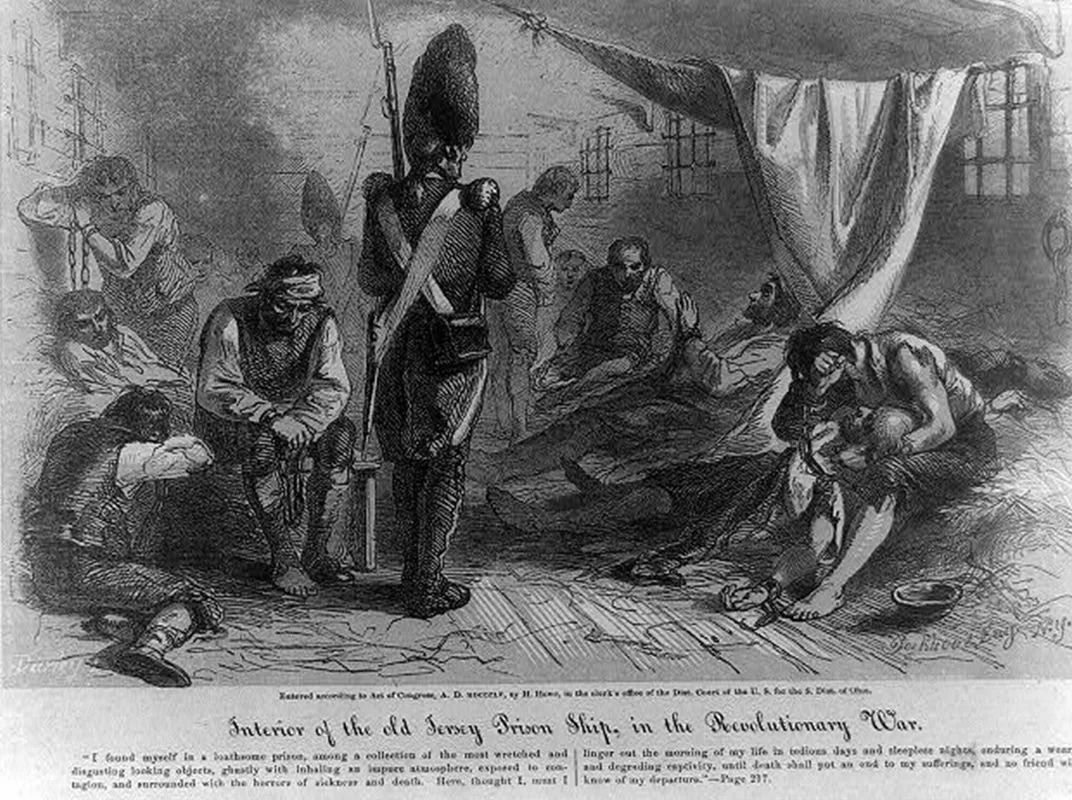
The prisoners suffered poor living conditions below deck, where 11,500 men and women were packed into dark holds. The prison ships were severely overcrowded, poorly ventilated, and provided little clean water and food. The lack of sanitation contributed to widespread outbreaks of smallpox, dysentery, and typhus. Within days or weeks of imprisonment, many people were malnourished and physically weakened. Prisoners repeatedly set the boats they were trapped in on fire—a testament to the horrid conditions.
Nineteen year old Lt. Robert Troup from Elizabethtown, NY testified to these conditions after he was captured at the Battle of Brooklyn (Troup was Alexander Hamilton’s roommate at Kings College, now Columbia):
“between seventy and eighty officers who were prisoners there, were put aboard a small [boat] which had been employed bringing cattle from England [...] and obliged lay upon the dung and filth the cattle without any bedding blankets; [...] they were much afflicted with lice and other vermin [and] they were obliged to drink stinking water which had been brought with them from England, and when they asked for better they were told it was good enough for rebels.”
-
Free Black man from Massachusetts
Enlisted in the Continental Army in 1775, making him one of the many Black men who participated in the Revolutionary War from its earliest years.
Fought with American forces at the Battle of Bunker Hill in June 1775.
His service reflects the complicated hopes that many Black Americans placed in the Revolutionary cause. As Americans argued that “all men are created equal” and fought against British oppression, many enslaved and free Black people hoped that the language of liberty would eventually extend to them.
London later served with the 2nd Rhode Island Regiment, a unit that became notable for its large number of Black soldiers.
The regiment was sent to New York as part of the American forces defending the region.
During the Battle of Brooklyn, London Citizen was captured near Flatbush Pass and became a prisoner of the British.
His ultimate fate remains uncertain, making his story an example of how difficult it can be to trace the lives of individual Revolutionary War prisoners.
This story reminds us that the fight for American independence was complicated. Here was a free Black man who took up arms for the same idea of liberty that white revolutionaries were fighting for. Yet the society he was helping to create still permitted slavery. For men like London Citizen, the question was not simply whether America would become independent from Britain, but whether the promises of liberty and equality would eventually include them.
-
19 year old Lt. Robert Troup from Elizabethtown, NY testified to these conditions after he was captured at the Battle of Brooklyn (Troup was Alexander Hamilton’s roommate at Kings College, now Columbia):
“between seventy and eighty officers who were prisoners there, were put aboard a small [boat] which had been employed bringing cattle from England [...] and obliged lay upon the dung and filth the cattle without any bedding blankets; [...] they were much afflicted with lice and other vermin [and] they were obliged to drink stinking water which had been brought with them from England, and when they asked for better they were told it was good enough for rebels.”
we hope you enjoy the park!
Keeping the park beautiful is in the hands of you and all of the Fort Greene Park community!
When visiting the park, please keep NYC Parks etiquette guidelines and rules in mind. Click the button below to learn more.